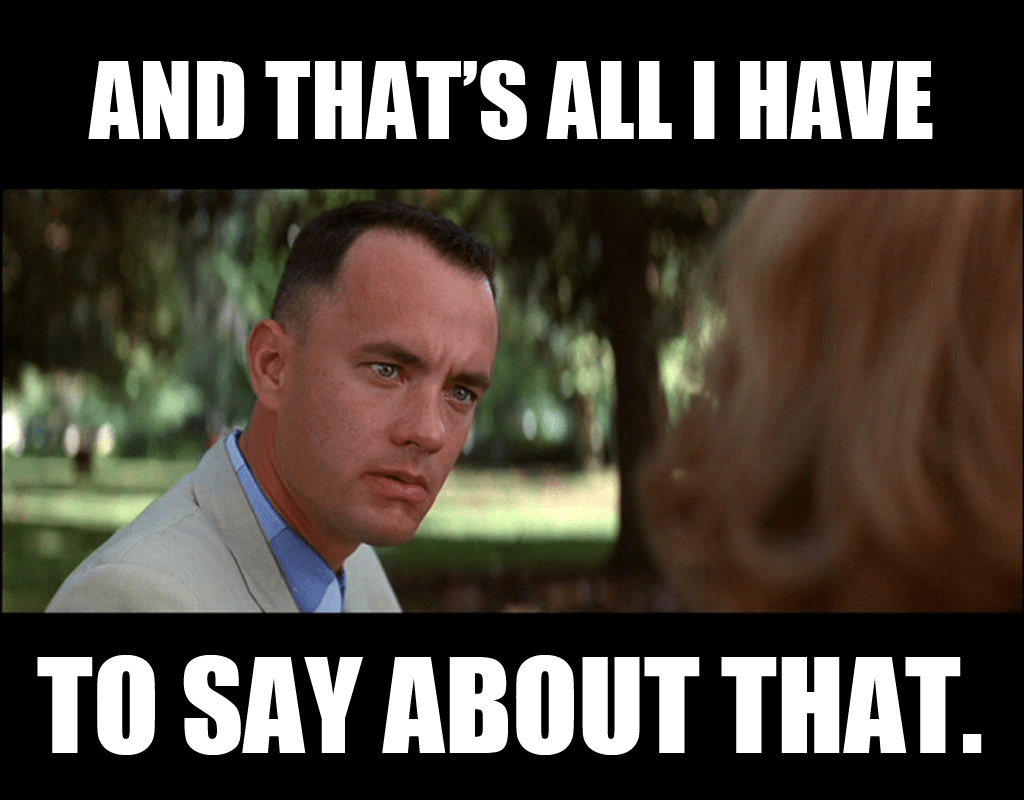
Should we all be more like Forrest Gump?

“Forrest Gump” is one of my favorite movies. It’s not only a movie about an amazing person and an improbable hero, but an inspiring movie as well.   
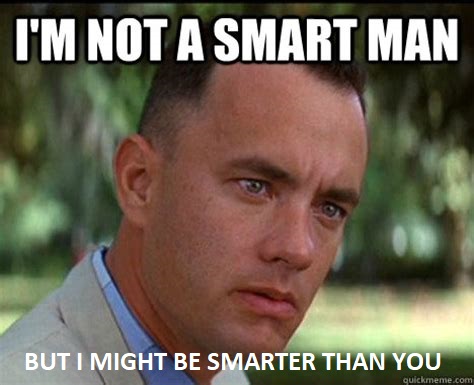
In the movie, we were all made quite aware that Forrest isn’t the sharpest knife in the drawer, nor does he communicate particularly well, but…, as we learn throughout the rest of the movie, his redeeming qualities are quite impressive.
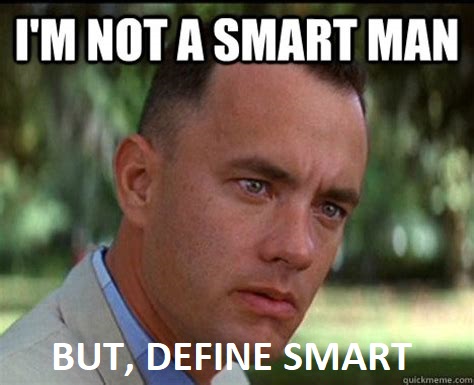
Forrest was honest with everyone he interacted with, and he had nothing to hide.

His moral compass was straight forward and non-negotiable.

Forrest was extremely loyal and caring. Who could ask for a better son, a better father, or a better friend?

Forrest accepted his responsibilities, and did what was right and what was needed to be done without question or complaint.

Forrest was able to focus on, and master, one thing at a time, which is a valuable lesson. Most of us are destined to become a “Jack of all trades, but a master of none.”

And, Forrest “knew what love is.”

Whether it as playing football, being a soldier, playing ping pong, running, or being a shrimp boat captain, Forrest strived to do his best at whatever he was focused on at the time.

It was really quite simple.

During my time as an elementary school teacher, my class would routinely read about other children who had accomplished great things in the worlds of music, or sports, etc.

I would ask my kids what they felt was stopping them from accomplishing those same things?

I usually would not get much of a reply as they pondered the question.

I would then proceed to let them know that THEY were the only thing stopping themselves from accomplishing great things.

They were the ones listening to people who said they couldn’t do this, or couldn’t do that.

They were the ones sabotaging their own potential accomplishments.

And we all know that, “Whether you think you can, or you think you can’t, you’re right.”

Then there is the matters of dedication and sacrifice.

I would tell the kids, it’s not necessarily a matter of talent or knowledge, but a matter of desire.

I would remind them that in the story we read, the boy or girl normally talked about getting up early every day and practicing many hours each day.

I would ask them, “Don’t you think you’d be very good at playing a given instrument, or playing a given sport, if you practiced as much as this other kid did?”

Our education system is not designed for each student to reach their full potential. Our education system is designed to help make our students productive citizens…, and it doesn’t even to a good job at that.

Should we all be more like Forrest Gump?

Definitely.
If you’re not already “following” me and you liked my blog(s) today, please choose to “follow” me, which will keep you up to date on all of my latest posts, and/or leave me a comment.  I value your feedback and I’d love to hear from you!

Thank you, MrEricksonRules.

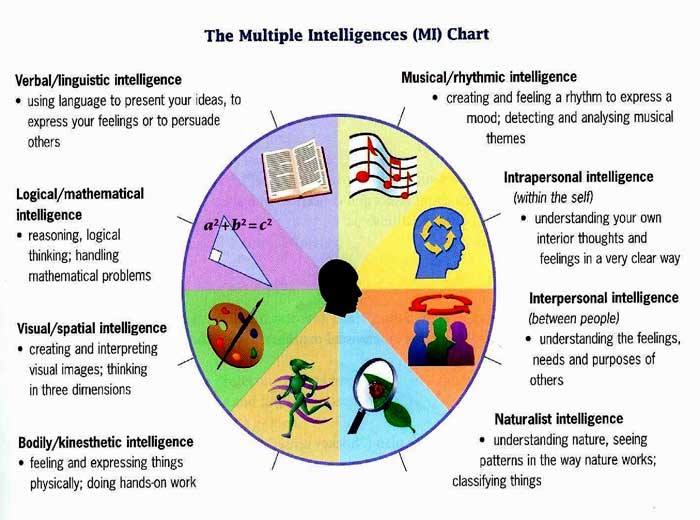
The question isn’t “are you intelligent?”  It’s “how are you “intelligent?”

The theory of multiple intelligences was started back in 1983 by Dr. Howard Gardner, a professor of education at Harvard University.

mult inteligence 1

He felt that the older beliefs about intelligence, based on I.Q. testing, were not really fair and far too limited.

Instead, Dr. Gardner proposed eight different types of intelligences to represent a wider range of interests in children and adults. These intelligences are:

mult intelligence 3

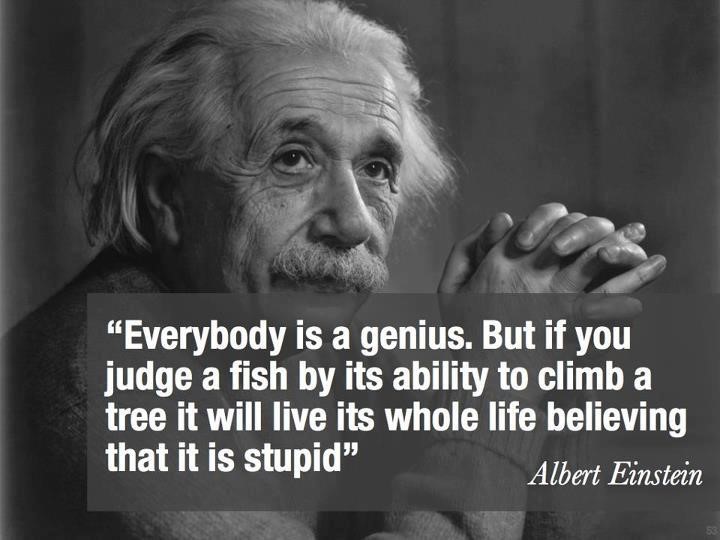
Our schools typically focus most of their attention on linguistic (reading and writing) and mathematical intelligence.  For students who happen to be naturally talented in these areas, school is fun because they are successful.  For those of us who are more talented in other areas, school can be frustrating, difficult and/or boring.

mult intelligence 4

It would be nice if we could place equal attention on individuals who show gifts in the other intelligences: the artists, architects, tradespeople, musicians, naturalists (nature, animals and or plants), designers, dancers, therapists, salespeople, entrepreneurs, and many others who enrich the world in which we live…, but that just is not the case.

Unfortunately, many students who have these gifts don’t receive much reinforcement or encouragement in school.  Many of these students, in fact, end up being labeled “learning disabled,” having “ADHD (attention deficit hyperactivity disorder,” or simple as underachievers, when their unique ways of thinking and learning aren’t addressed by a heavily tilted reading/writing and mathematical curriculum and classroom.

Every teacher out there has been made aware of the theory of multiple intelligences.  But the theory of multiple intelligences and how we address multiple intelligences does not translate well when we bump up against everyday reality, which has limited money, limited time, limited teacher resources, and large class sizes.

The challenge is to change our educational way of doing things so that each child has the opportunity to learn in ways that go along with their unique minds, ways of thinking, talents and interests.

The I.Q. test was developed in 1900 by a French psychologist, Alfred Binet.  The “I.Q” test does have some value, but it does not take into account many things regarding intelligence and talents that are not easily quantifiable.

As far as our schools are concerned, “Just because everyone is ‘treated the same’ does not mean ‘everyone is being treated fairly.’”

mult intelligence 2

(“Ctrl” and click on the following websites to access them.)

You can learn more about multiple intelligences and Howard Gardner at his website: http://www.howardgardner.com/

Here is a website where you can take your own multiple intelligences assessment: www.mypersonality.info


NOTE:  If you’re not already “following” me and you liked my blog(s) today, please scroll down to the bottom of this site and click the “Follow” button.  That’ll keep you up to date on all of my latest posts.

Thank you, MrEricksonRules.

Blog at WordPress.com.

Up ↑